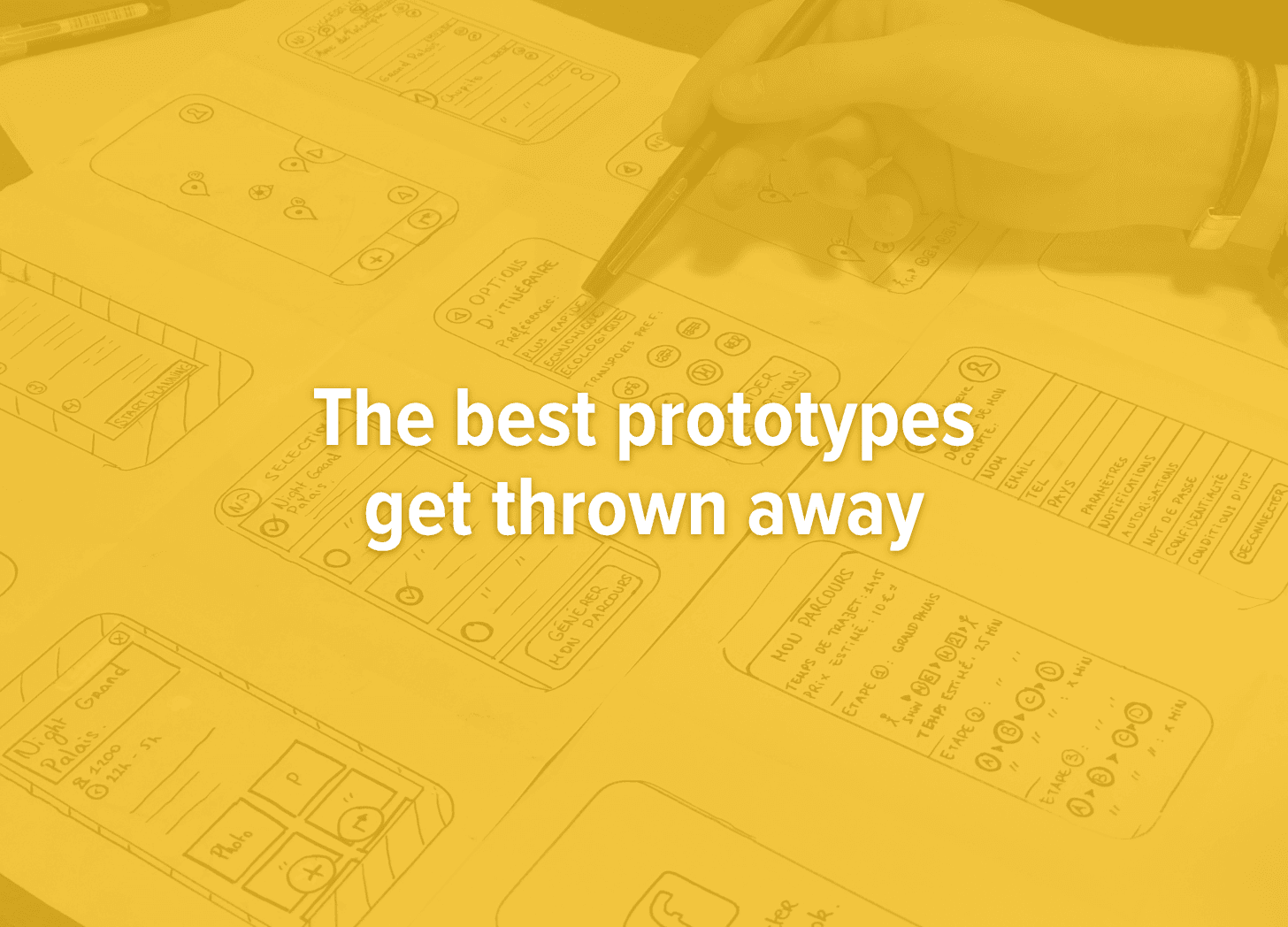
At Tripadvisor, trip planning was one of the hardest features I worked on. Trip planning is deeply personal—everyone does it differently. We ran research sessions with travelers to understand their workflows. Several showed up with dog-eared notebooks scrawled with handwritten notes and stuffed with Post-its.
The notebooks told us everything we needed to know about what people wanted. But our paper prototypes couldn’t capture the dynamic reality of trip planning: the back-and-forth between travelers, the way plans evolved as people added ideas, and the messiness of group decisions. Today, we could put a working prototype in front of those travelers in an afternoon.
What this essay explores
- Recognize why polished but inaccurate AI prototypes break users’ suspension of disbelief during research.
- Understand why asking AI to solve UX, data, content, and logic at once falls short.
- Build prototypes that look and behave enough like products to support better decisions.
- Generate realistic, structured mock data before asking AI to design the product experience.
- Use a data schema to give prototyping tools unambiguous context and focus them on UX.
- Iterate faster with modular prototype code that maps directly to the underlying data structure.
Reforge Build asks clarification questions when necessary.
Key takeaway
Product teams need prototypes that are tools, not toys. Learn how to level up your prototypes using a data-driven approach.